
No reviews yet. Be the first to share your experience!
Home > Veterinary Medicine > Cardiology / Heart / Blood Pressure > Mexiletine HCL Suspension Compounded
Mexiletine HCL Suspension Compounded
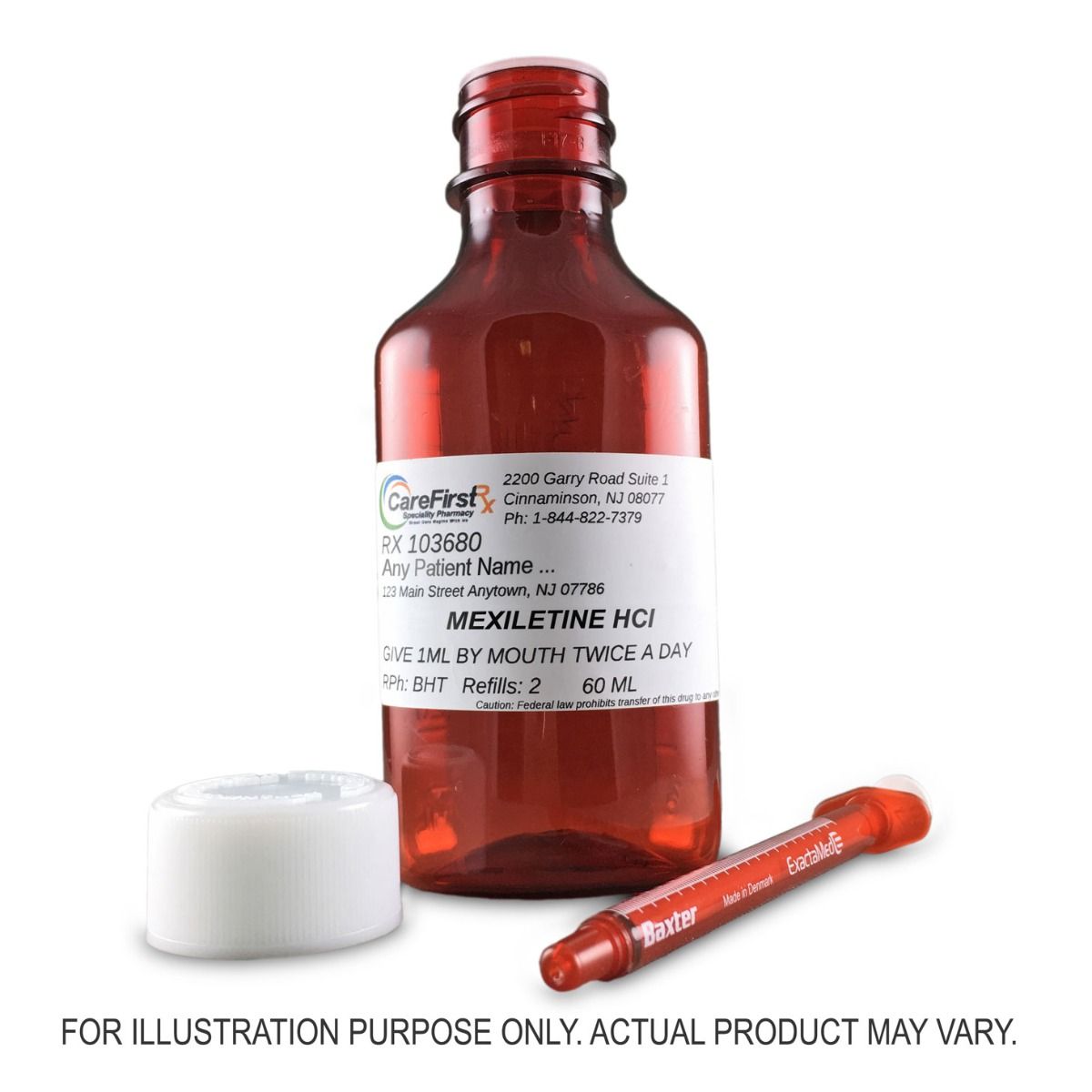
Mexiletine is classified as a Class IB antiarrhythmic. It blocks sodium channels to slow down the rate of heart contractions. It is used primarily to treat and prevent premature ventricular contractions (PVCs) and ventricular tachycardia in dogs. It may also be helpful in treating myotonia congenita and other myopathies.
Start by selecting a form for your price
StrengthSelect a form first
QuantitySelect a strength first
FlavorSelect a form first
Price: as low as $47.95
Please Note: Due to market volatility, prices are subject to change. Please contact us for the most current pricing.
Ready to Move Forward?
Select the action that best fits how you'd like us to handle the prescription.
This medication requires a prescription.
To process your order we will require a prescription from you or your Prescriber. We will only compound and dispense upon receipt of a valid patient specific prescription.
- Your prescriber can mail or fax in the prescription
- You can mail in the original prescription
- We can contact your prescriber for you
- You can transfer your prescription from another pharmacy

Are you a licensed Prescriber?
Choose the option that best fits how you’d like to send scripts or connect with us.
Fax Your Prescription
Fax (800) 786-1405 or (844) 922-7379 and we’ll process it right away.
Phone In
Call our pharmacists at (844) 822-7379 with prescription details.
Request More Info
Complete the prescriber form and we’ll follow up quickly.
Email Our Team
[email protected] for questions, refills, or status updates.

Looking for a Different Strength?
Pharmacy Info
We are a nationally accredited PCAB compounding pharmacy and a .Pharmacy verified website. A verified .Pharmacy website designation ensures our patients and prescribing partners that our website is verified and safe.
https://safe.pharmacy/buy-safely/?url=cfspharmacy.pharmacy
Drug Description
Actual product image may vary.
Product Info
Mexiletine is classified as an antiarrhythmic, specifically a class IB antiarrhythmic. It can be helpful in treating some arrhythmias as well as some myopathies in dogs.
How is Mexiletine Used?
Normally, mexiletine is dispensed in capsule form. However, our pharmacy can also compound mexiletine into an oral suspension that may make it easier for your pet to ingest.
What is Mexiletine Used for?
Mexiletine is primarily used for certain types of arrhythmias in dogs, specifically premature ventricular contractions (PVCs) and ventricular tachycardia. It may also be helpful in treating myotonia congenita and other myopathies.
Ventricular Arrhythmias
Mexilitene is often used in dogs with PVCs and ventricular tachycardia, especially in cases where lidocaine was ineffective. It can be given both to treat these conditions and to prevent them from occuring in the future.
Side Effects and Important Information
The most common side effect associated with this medication is GI upset, including nausea and vomiting. This may be alleviated by taking this medication with food. Other side effects include:
- Trembling/dizziness
- Shortness of breath
- PVCs
- Chest pain
- Seizures
- Thrombocytopenia
If your pet experiences any side effects when using mexiletine, contact your veterinarian right away. Talk to your pharmacist or veterinarian if your pet is taking any other medications, as mexiletine may interact with other medications. Use the medication as prescribed by your veterinarian. The information provided is not intended to cover all possible uses. This information is generalized and not intended as specific medical advice. If you have questions about the use of your prescription, please contact your prescriber.
References:
- Plumb, Donald C. (2018). Plumb's veterinary drug handbook. Stockholm, Wis.: Ames, Iowa: PharmaVet; Distributed by Blackwell Pub.
Active Ingredients
Mexiletine
Directions
Consult your prescriber.
Instructions
Use the medication as prescribed by your doctor. The information provided is not intended to cover all possible uses. This information is generalized and not intended as specific medical advice. If you have questions about the use of your prescription, please contact your prescriber.
Shipping
Troches and suppositories require refrigeration (ice packs) and will incur an extra charge of $19.95 per order.
Reviews
Customer Reviews
No reviews yet
Leave a Review
We are a nationally accredited PCAB compounding pharmacy and a .Pharmacy verified website. A verified .Pharmacy website designation ensures our patients and prescribing partners that our website is verified and safe.
https://safe.pharmacy/buy-safely/?url=cfspharmacy.pharmacy
Actual product image may vary.
Mexiletine is classified as an antiarrhythmic, specifically a class IB antiarrhythmic. It can be helpful in treating some arrhythmias as well as some myopathies in dogs.
How is Mexiletine Used?
Normally, mexiletine is dispensed in capsule form. However, our pharmacy can also compound mexiletine into an oral suspension that may make it easier for your pet to ingest.
What is Mexiletine Used for?
Mexiletine is primarily used for certain types of arrhythmias in dogs, specifically premature ventricular contractions (PVCs) and ventricular tachycardia. It may also be helpful in treating myotonia congenita and other myopathies.
Ventricular Arrhythmias
Mexilitene is often used in dogs with PVCs and ventricular tachycardia, especially in cases where lidocaine was ineffective. It can be given both to treat these conditions and to prevent them from occuring in the future.
Side Effects and Important Information
The most common side effect associated with this medication is GI upset, including nausea and vomiting. This may be alleviated by taking this medication with food. Other side effects include:
- Trembling/dizziness
- Shortness of breath
- PVCs
- Chest pain
- Seizures
- Thrombocytopenia
If your pet experiences any side effects when using mexiletine, contact your veterinarian right away. Talk to your pharmacist or veterinarian if your pet is taking any other medications, as mexiletine may interact with other medications. Use the medication as prescribed by your veterinarian. The information provided is not intended to cover all possible uses. This information is generalized and not intended as specific medical advice. If you have questions about the use of your prescription, please contact your prescriber.
References:
- Plumb, Donald C. (2018). Plumb's veterinary drug handbook. Stockholm, Wis.: Ames, Iowa: PharmaVet; Distributed by Blackwell Pub.
Mexiletine
Consult your prescriber.
Use the medication as prescribed by your doctor. The information provided is not intended to cover all possible uses. This information is generalized and not intended as specific medical advice. If you have questions about the use of your prescription, please contact your prescriber.
Troches and suppositories require refrigeration (ice packs) and will incur an extra charge of $19.95 per order.
Customer Reviews
No reviews yet