
Ivermectin: How It’s Used & Its Role in Therapy
Ivermectin: How It’s Used & Its Role in Therapy
By: Andy Ha
PharmD Candidate 2027
Philadelphia College of Pharmacy
Discovered in the 1970s, the anthelmintic drug ivermectin (semi-synthetic derivative of avermectin) initially started out as a veterinary drug for animal health. Ivermectin was one of the first in a new class of agents, called macrocyclic lactones, used for parasitic infections. Its broad-spectrum antiparasitic activity made it effective against numerous parasites (roundworms, lungworms, mites, lice, hornflies, etc.) as well as ticks (e.g., ixodid tick Rhipicephalus microplus). The broad range of ivermectin’s effectiveness has enabled it to be used in livestock, pets, and humans alike. Specifically in humans, ivermectin treats internal nematode infections (onchocerciasis, strongyloidiasis, ascariasis, cutaneous larva migrans, filariases, gnathostomiasis, and trichuriasis) and ectoparasitic infections (pediculosis caused by lice and scabies caused by mites). Ivermectin’s initial purpose was to eradicate onchocerciasis (River Blindness) and lymphatic filariasis (elephantiasis), which were endemic to many poor and developing countries in the tropics. The drug’s affordability, safety, and ease of use enabled it to be used for numerous official and off-label indications.
Ivermectin acts as an endectocide, meaning it acts against both endoparasites (e.g., nematodes) and ectoparasites (e.g., insects and arthropods). The drug has selective and high-affinity binding to glutamate-gated chloride ion channels or gamma-aminobutyric acid (GABA) gated chloride channels that are in the membranes of pharyngeal muscles, motor nerves, female reproductive tracts, and excretory/secretory pores of nematodes and insects. The glutamate-gated chloride ion channels in these membranes are opened by the drug, which leads to GABA release and increased GABA binding at the motor neuron synapses. As a result, hyperpolarization occurs in the parasite’s neurons and muscles through increased influx of chloride ions. This causes muscle paralysis and death in the parasite. For humans and other mammals, these glutamate- and GABA-gated chloride ion channels are primarily located in the central nervous system (CNS) and are not present in the peripheral nervous system. Because ivermectin cannot cross the blood-brain barrier (BBB) or enter the CNS at other points, humans are not affected in the same way as the parasites unless the CNS is exposed.
Ivermectin has been widely used in human medicine since the 1980s, primarily due to its impressive safety profile. It is generally well-tolerated, but some side effects may include diarrhea, gastrointestinal upset, headaches, dizziness, low-grade fever, skin rash, and/or itching. These side effects mostly result from the effect ivermectin is exerting on the parasite and any reaction to the parasite’s death or expulsion from the body. A stool exam may need to be performed after taking ivermectin tablets to ensure the infection is gone.
Regarding drug and food interactions, alcohol is not recommended for patients taking ivermectin because of the drug’s association with GABA receptors and alcohol’s effect on the CNS. Ivermectin’s plasma concentration may be increased by consumption of beer. Oral ivermectin is rapidly absorbed and has high lipid solubility, meaning it is widely distributed in the body. It is typically taken on an empty stomach with a glass of water, but it can be taken with a high-fat meal to increase drug bioavailability and absorption if needed.
Other considerations to keep in mind include pregnant individuals and infants. Ivermectin has been reported to be teratogenic and present in breast milk in some cases. Overall, there have been no adequate studies or trials to conclude ivermectin’s safety in pregnancy, which is why pregnant individuals should avoid taking it. In children and infants, ivermectin is not recommended for those less than 5 years of age and weighing under 15 kg. P-glycoproteins prevent ivermectin from accumulating in mammalian brain tissue; however, P-gp levels at the blood-brain barrier are lowest during infancy, so ivermectin cannot be safely given. In addition, individuals with hepatic impairment are not recommended to take ivermectin because hepatic impairment will likely affect the drug’s metabolism and elimination in the liver. For immunocompromised patients, a repeat of treatment may be needed to ensure complete eradication of parasites.
Ivermectin is available orally as tablets or topically as creams and lotions. In the U.S., it comes in the form of 3 mg and 6 mg oral tablets, or 1% creams and 0.5% lotions. Ivermectin is given orally for most parasitic infections and dosed by weight; however, topical formulations can be used for indications such as rosacea (cream) and pediculus capitis (lotion). Topical ivermectin use in other instances, such as scabies, would be considered off-label indications. Oral and topical administration have been FDA-approved for humans but only for specific indications. Parenteral administration is only approved for veterinary use. Patients should not take ivermectin without a prescription and should be aware of animal-grade, veterinary formulations that may be sold on the market.
Since ivermectin comes in the form of 3 mg or 6 mg tablets, it is usually insufficient for off-label indications. Compounding is necessary to make formulations that are not commercially available. For example, 1 mg and 40 mg capsules are beyond the range of typical doses using ivermectin 3 mg tablets. Dosing is weight-based (150-200 mcg/kg), and these compounded formulations help to ease pill burden for patients by reducing reliance on standard 3 mg tablets. Patients are not limited to ivermectin strengths that may be too low or too high for their needs. Compounding ivermectin provides accurate and individualized dosing as well as custom dose strengths for both human and veterinary patients. Compounded medications are also free from patient-specific allergens (gluten, corn, lactose, etc.) that are often present in mass-manufactured drugs.
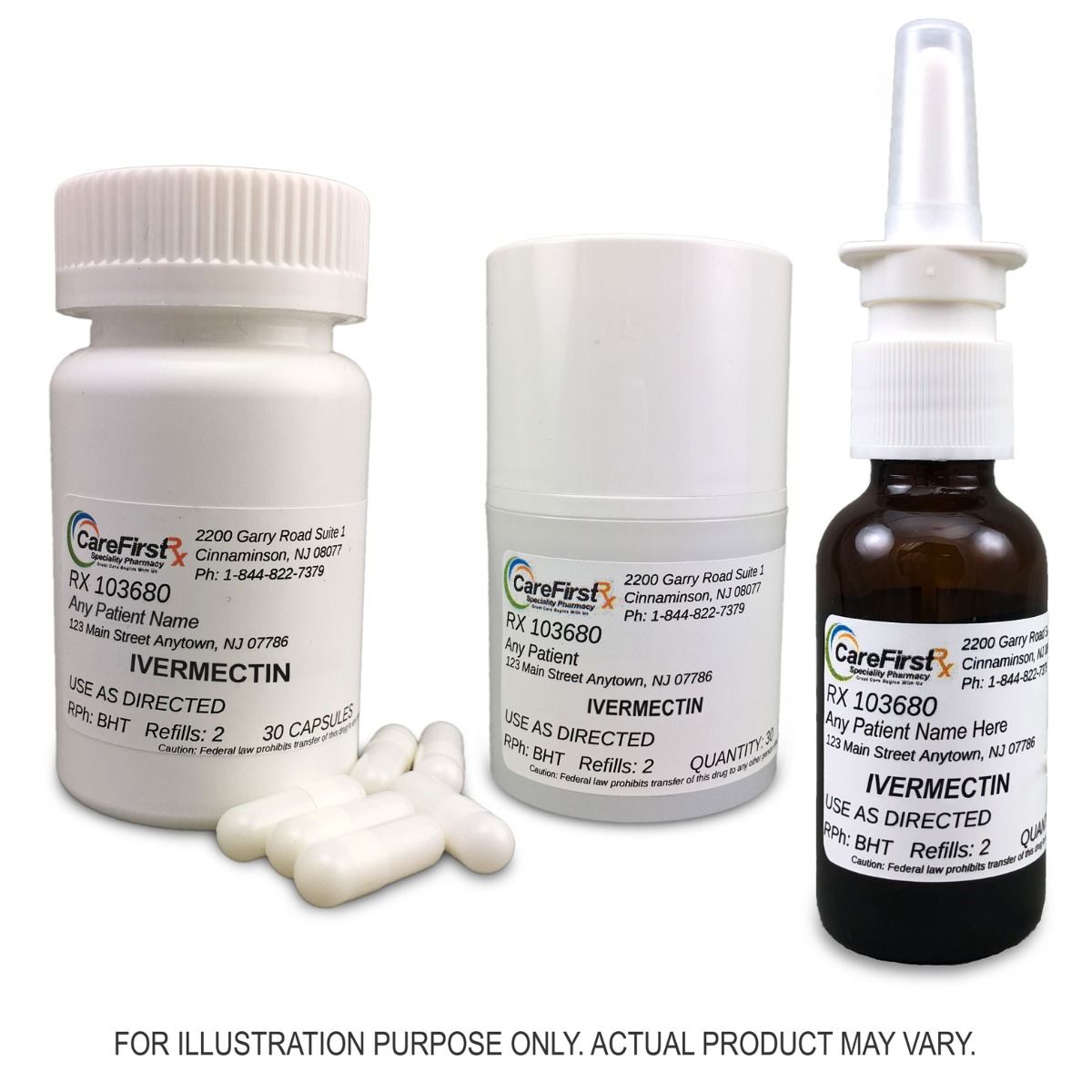
This allows for ivermectin use in off-label indications, such as chronic inflammation, viral infection management, and resistant or refractory parasitic infections. Ivermectin possesses antiviral and immunomodulatory mechanisms that make it useful in regulating immune overactivity, which helps against autoimmune and inflammatory disorders and supports post-viral recovery. Ivermectin may have benefits in chronic inflammatory disorders, including rheumatoid arthritis (RA), multiple sclerosis (MS), and inflammatory bowel disease (IBD). Beyond tablets and capsules, compounded ivermectin nasal sprays are available for local inflammation of the nasal passages and upper respiratory tract. In addition, ivermectin can be compounded into topical formulations to treat inflammatory skin disorders, such as psoriasis. Resistant scabies and demodex infestations may be treated with topical ivermectin as well. Currently, ivermectin’s use for these indications is being studied because evidence of conclusive benefit is still lacking.
Originally an antiparasitic agent, ivermectin has been looked at as a potential candidate for COVID-19 and cancer treatments. Ivermectin possesses some antiviral and antitumor properties that are not well understood. The FDA and WHO have not approved the use of ivermectin for COVID-19 or cancer because multiple trials did not offer conclusive evidence of clinical benefit. The results were achieved in laboratory petri dishes (in vitro), which meant that an extremely high dose of ivermectin would be required to achieve the same antiviral concentrations in the human body.
Further research is needed to fully explore ivermectin’s potential applications, and clinical studies are continuing to investigate its effectiveness in malaria, various cancer types, COVID-19, and more. For instance, efforts have been made to study ivermectin’s role in targeting the mitochondrial-stem cell connection (MSCC) in cancer. The MSCC theory suggests that poor energy production in normal stem cells causes those stem cells to become abnormal and cancerous. Ivermectin has antitumor properties that could be helpful for damaging cancer stem cell mitochondria, targeting stem cell energy production, and inducing cell death. As for many other off-label indications, ivermectin has not been extensively proven in large-scale human studies. However, ivermectin serves as a viable alternative to traditional agents when patients are limited by preference and individual health factors or by failure of primary treatment options.
References
- American Cancer Society. What to Know About Ivermectin. American Cancer Society [Internet]. 2026 May 21 [cited 2026 Jul 20]; Available from: https://www.cancer.org/cancer/latest-news/what-to-know-about-ivermectin.html
- Bayview Pharmacy. Ivermectin 10 mg/ml Nasal Spray - Compounded Treatment [Internet]. Bayview Pharmacy. 2025 [cited 2026 Jul 24]. Available from: https://www.bayviewrx.com/formulas/Ivermectin-10-mg-ml-Nasal-Spray-Rosacea-Head-Lice-Scabies-Airway-Inflammation-Viral-Infections
- Canadian Society for Orthomolecular Medicine. Targeting the Mitochondrial-Stem Cell Connection in Cancer Treatment: A Hybrid Orthomolecular Protocol [Internet]. ISOM. 2024. Available from: https://isom.ca/article/targeting-the-mitochondrial-stem-cell-connection-in-cancer-treatment-a-hybrid-orthomolecular-protocol/
- Crump A, Ōmura S. Ivermectin, 'wonder drug' from Japan: the human use perspective. Proc Jpn Acad Ser B Phys Biol Sci. 2011;87(2):13-28. Available from: https://pmc.ncbi.nlm.nih.gov/articles/PMC3043740/
- González Canga A, Sahagún Prieto AM, Diez Liébana MJ, Fernández Martínez N, Sierra Vega M, García Vieitez JJ. The pharmacokinetics and interactions of ivermectin in humans--a mini-review. AAPS J. 2008;10(1):42-6. Available from: https://pmc.ncbi.nlm.nih.gov/articles/PMC2751445/
- Juarez M, Schcolnik-Cabrera A, Dueñas-Gonzalez A. The multitargeted drug ivermectin: from an antiparasitic agent to a repositioned cancer drug. Am J Cancer Res. 2018 Feb 1;8(2):317-331. Available from: https://pmc.ncbi.nlm.nih.gov/articles/PMC5835698/
- Lexi-Drugs [Internet]. Waltham, MA: UpToDate Inc. c2026. Ivermectin; [updated 2026 Jul 20, cited 2026 Jul 20]. Available from: https://online.lexi.com/
- LiverTox: Clinical and Research Information on Drug-Induced Liver Injury [Internet]. Bethesda (MD): National Institute of Diabetes and Digestive and Kidney Diseases; 2012-. Ivermectin. [Updated 2021 Apr 9]. Available from: https://www.ncbi.nlm.nih.gov/books/NBK548921/
- Mathachan SR, Sardana K, Khurana A. Current Use of Ivermectin in Dermatology, Tropical Medicine, and COVID-19: An Update on Pharmacology, Uses, Proven and Varied Proposed Mechanistic Action. Indian Dermatol Online J. 2021 Jul 14;12(4):500-514. Available from: https://pmc.ncbi.nlm.nih.gov/articles/PMC8354388/
- Puckey M. Ivermectin [Internet]. Drugs.com. 2025 [cited 2026 Jul 20]. Available from: https://www.drugs.com/ivermectin.html
- Rubicon Research Private Limited. Stromectol (ivermectin) [package insert on the Internet]. Bethesda (MD): National Library of Medicine; [revised 2025 Jan 29, cited 2026 Jul 20]. Available from: https://dailymed.nlm.nih.gov/dailymed/drugInfo.cfm?setid=e88adfbc-e375-4fea-827e-6ec51ed6fd0a
- Shah K. What is Ivermectin therapy? [Internet]. Your Local Glen Rock Pharmacy. 2025 [cited 2026 Jul 24]. Available from: https://www.rockridgepharmacy.com/compounded-ivermectin-solutions-personalized-care-at-rock-ridge-pharmacy
- Tang M, Hu X, Wang Y, Yao X, Zhang W, Yu C, Cheng F, Li J, Fang Q. Ivermectin, a potential anticancer drug derived from an antiparasitic drug. Pharmacol Res. 2021 Jan;163:105207. Available from: https://pmc.ncbi.nlm.nih.gov/articles/PMC7505114/#abs0015
- Townelake. The Multi-Faceted Uses for Ivermectin [Internet]. Towne Lake Family Pharmacy. 2025 [cited 2026 Jul 24]. Available from: https://townelakepharmacy.com/the-multi-faceted-uses-for-ivermectin/
- Wellness RCP+. Compounded Ivermectin Capsules: Precision Dosing, Proven Safety, and Evolving Research in 2025. Restorative Compounding Pharmacy + Wellness [Internet]. 2025 Oct 30 [cited 2026 Jul 24]; Available from: https://www.restorativecompounding.com/blog/compounded-ivermectin-capsules-precision-dosing-evolving-research-and-obtaining-safely
Reference Products
Products mentioned in this article.
Ivermectin Compounded
Ivermectin belongs to a class of drugs known as anthelmintics. This medication is used to treat certain parasitic roundworm infections. You may buy Ivermectin from CareFirst Specialty Pharmacy with a valid prescription from your prescriber.