Understanding How Topical Eflornithine and Metformin Regulate Hair Growth
Understanding How Topical Eflornithine and Metformin Regulate Hair Growth
Excess hair growth, or hirsutism, remains a common cosmetic and clinical concern that affects confidence and quality of life. While hormonal therapy and laser treatments have dominated management for decades, non-hormonal pharmacologic strategies are gaining traction. Among these, topical eflornithine and topical metformin are emerging as innovative, targeted therapies that influence follicular activity through distinct molecular pathways.
The Science of Hair Growth: Why It's More Complex Than You Think
Human hair growth is driven by cyclical interactions between epithelial and dermal components of the follicle. The anagen (growth), catagen (regression), and telogen (resting) phases are regulated by a network of growth factors, hormones, and cellular signaling pathways. In women, excessive or male-pattern hair growth — known as hirsutism — often stems from androgen excess or increased follicular sensitivity to androgens.
Conditions such as polycystic ovary syndrome (PCOS) or adrenal dysfunction can amplify this sensitivity, but idiopathic cases without hormonal abnormalities also exist. Traditional therapies target systemic androgen activity through oral contraceptives, spironolactone, or finasteride, while mechanical options like laser hair removal and electrolysis address cosmetic concerns. However, these methods may not be suitable for all patients due to contraindications, expense, or limited efficacy in certain skin types.
As a result, research has increasingly turned toward topical agents that modulate follicular metabolism locally without affecting systemic hormone levels.
Eflornithine: Targeting Follicular Growth at the Enzymatic Level
Eflornithine (α-difluoromethylornithine) was originally developed as an antiparasitic medication, but later found dermatologic utility due to its ability to inhibit ornithine decarboxylase (ODC) — a key enzyme in the biosynthesis of polyamines such as putrescine, spermidine, and spermine. These polyamines regulate cellular proliferation and differentiation, particularly within actively dividing tissues like hair follicles.
🧪 How It Works
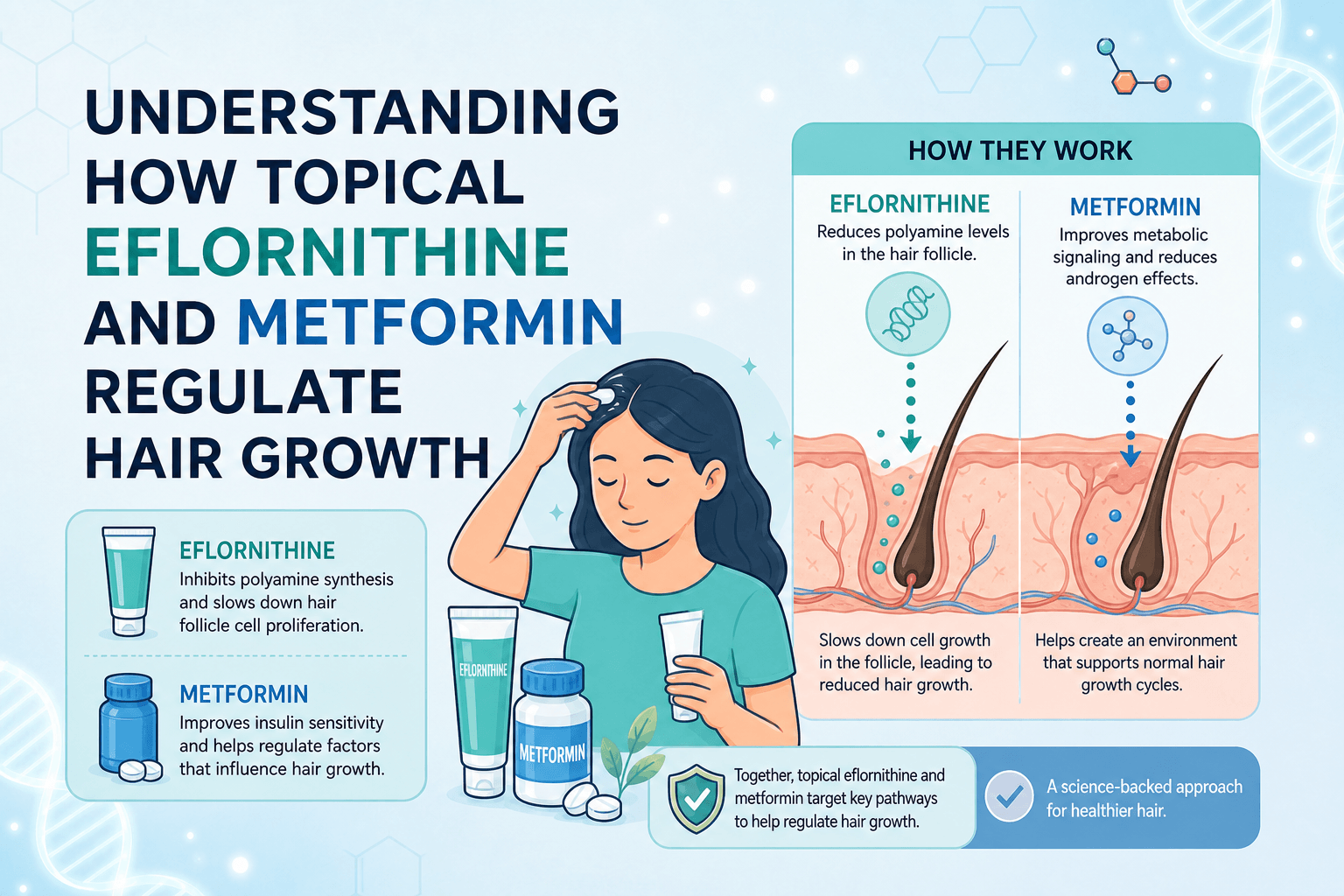
By irreversibly inhibiting ODC, eflornithine reduces polyamine synthesis, slowing matrix keratinocyte division and delaying the initiation of new hair shafts. This mechanism selectively reduces the rate of terminal hair growth without damaging existing follicles.
Clinical studies of topical eflornithine cream have demonstrated statistically significant reductions in hair growth after 6 to 8 weeks of twice-daily use. Improvements are typically maintained with continuous application, and adverse effects are limited to mild erythema, burning, or stinging sensations.
Recent reviews highlight that eflornithine is especially beneficial for facial hair management in women with PCOS or idiopathic hirsutism. Its localized mechanism minimizes systemic exposure, making it an attractive adjunct to laser hair removal or other depilatory techniques.
Topical Metformin: A New Frontier in Hair Reduction
Metformin, a biguanide class insulin-sensitizing agent, has long been used to treat hyperglycemia in type 2 diabetes mellitus. Its mechanism centers on the activation of AMP-activated protein kinase (AMPK), which reduces hepatic glucose output and enhances peripheral insulin uptake. In PCOS, metformin also exerts endocrine effects by lowering circulating insulin levels, thereby reducing ovarian androgen synthesis and restoring more physiologic gonadotropin signaling.
Kelly & Gordon (2002)
18 women with PCOS treated with metformin for 6 months showed significant reduction in serum testosterone and hirsutism scores on the Ferriman-Gallwey index.
Rezvanian et al. (2009)
42 women with PCOS receiving adjunctive metformin with IPL showed more durable and pronounced hair reduction compared to IPL alone, reinforcing the synergistic effect.
How Eflornithine and Metformin Work Together: Two Pathways, One Goal
Although eflornithine and metformin act through distinct molecular targets, their downstream effects converge on the reduction of follicular cell proliferation and modulation of hair growth kinetics.
Eflornithine
Acts enzymatically by blocking ODC and depleting polyamine availability — directly curtailing follicular matrix activity.
Metformin
Acts metabolically via AMPK activation to suppress anabolic signaling through mTOR — improving the local hormonal and inflammatory milieu.
Theoretically, concurrent or alternating use of both agents could yield additive benefits. This dual-mechanism model represents an emerging frontier in compounded dermatologic care.
Topical Formulation and Compounding Considerations
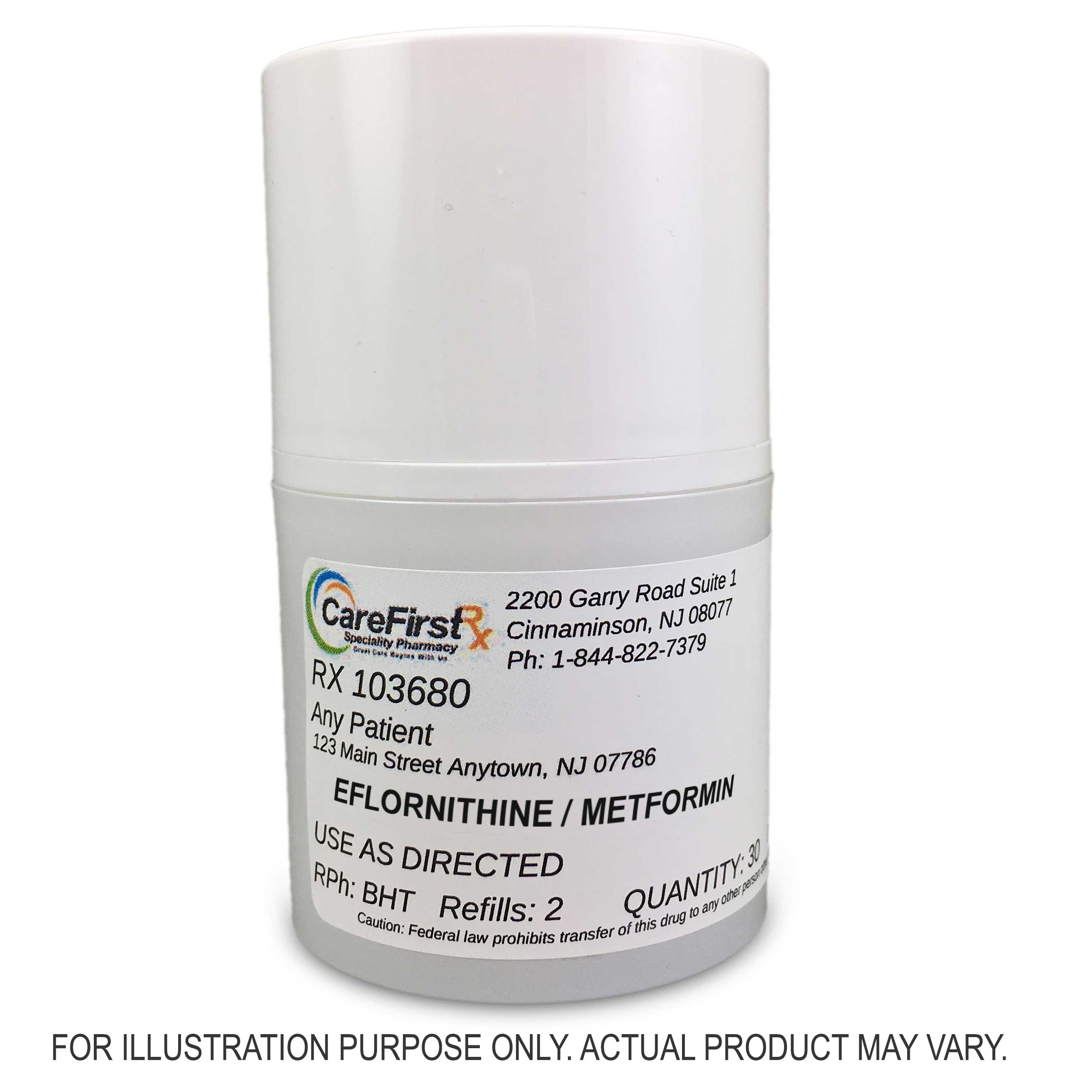
Eflornithine hydrochloride and metformin hydrochloride are both hydrophilic, water-soluble molecules, making them compatible with various cream or gel bases used in topical compounding.
Typical Compounding Concentrations
- Eflornithine HCl: 13.9% to 15% in hydrophilic base
- Metformin HCl: 3% to 10%, with 5% being most studied in dermatologic settings
Translating Science to Patient Care: Clinical Perspectives
Patients using topical eflornithine or metformin should be advised that results develop gradually, typically within two to three hair cycles. Consistency of use is key — skipping applications can allow follicles to return to their natural growth rate. When used as prescribed, these agents can reduce the frequency of hair removal and improve skin texture over time.
In clinical practice, topical pharmacologic agents offer a non-invasive bridge between cosmetic procedures and systemic medications. They are particularly valuable for patients unable or unwilling to pursue hormonal therapy or costly energy-based treatments. For prescribers, the ability to personalize concentration, base, and application schedule through compounding enhances both efficacy and tolerability.
Conclusion
Topical eflornithine and metformin represent an exciting convergence of dermatologic science and pharmaceutical innovation. Their complementary mechanisms — enzymatic inhibition and metabolic modulation — address the multifactorial nature of hair growth regulation at its root. As patient demand for safe, effective, and customizable therapies grows, these agents exemplify the future of evidence-based, patient-centered dermatologic compounding.
References
- Gallo M, et al. Personalized compounded dermatologic therapies: current evidence and best practices. Pharmaceutics. 2020;12(12):1214. doi:10.3390/pharmaceutics12121214
- Kelly CJ, Gordon D. The effect of metformin on hirsutism in polycystic ovary syndrome. Eur J Endocrinol. 2002;147(2):217–221.
- Rezvanian H, Adibi N, Siavash M, et al. Increased insulin sensitivity by metformin enhances intense-pulsed-light-assisted hair removal in patients with polycystic ovary syndrome. Dermatology. 2009;218(3):231–236. doi:10.1159/000187718
- Wolf JE Jr, Shander D, Huber F, et al. Randomized, double-blind clinical evaluation of the efficacy and safety of topical eflornithine HCl 13.9% cream in the treatment of women with facial hair. Int J Dermatol. 2007;46(1):94–98. doi:10.1111/j.1365-4632.2006.03079.x